

Sharks & Rays

Protecting Kenya's Sharks & Rays

We work alongside local communities to protect these vital marine species through practical, collaborative conservation efforts. Learn why their survival matters—and how together we’re making a difference
Why sharks and rays matter

Shark and ray conservation along the Kenyan coast is of paramount importance due to the critical role these species play in maintaining the health and balance of marine ecosystems in the region. The West Indian Ocean is home to a diverse range of shark and ray species, each with unique ecological roles that contribute to the overall stability of marine food webs and the health of coral reefs and other habitats.

Adult blacktip reef shark swimming in the shallows of the Watamu Marine Park.

Sharks, as apex predators, help regulate the populations of their prey species, preventing cascading effects throughout the food chain. Their presence can control the abundance of lower trophic level organisms, thereby maintaining the health and resilience of marine ecosystems. 

Spotted eagle ray hunting in the Watamu Marine Park

Rays contribute to ecosystem functioning by influencing the distribution and behavior of their prey, such as shellfish and small fish, helping to maintain the balance of the benthic and pelagic environments.

More than just ecological significance

In addition to their ecological significance, sharks and rays also have considerable socio-economic value for the countries in the West Indian Ocean.

They contribute to tourism through activities like scuba diving and eco-tourism, which generate income and employment opportunities for local communities.

Furthermore, these species are often have cultural value and are targets of fisheries for their meat, fins, and other body parts, contributing to regional economies and food security.

However, many shark and ray species in the West Indian Ocean are facing severe threats, primarily due to overfishing driven by international demand for their products. The slow growth, low reproductive rates, and vulnerability to fishing pressures make them particularly susceptible to population declines. Habitat degradation, accidental bycatch, and inadequate management measures further exacerbate their predicament.

Efforts to conserve sharks and rays are crucial for preserving both ecological integrity and socio-economic sustainability. Implementing effective fisheries management measures, establishing marine protected areas, regulating trade in shark and ray products, and raising public awareness about their importance are all essential steps toward ensuring the survival of these iconic and ecologically significant species in the region.

Our Community-Led Approach

We believe true conservation blooms from the ground up. Our community-led model works to equip Kenyan coastal guardians—fishers, youth, and elders—with tools, knowledge, and ownership. 

This ensures we develop practical and realistic interventions that will have a lasting change.

How Community-Led Conservation Saves Sharks & Rays

1. Knowledge as Power

We deliver tailored educational kits via workshops, school programs, and fisher groups. Helping people understand their importance to the ecosystem and their own livelihoods.

Since 2021 we have helped pioneer Shark & Ray conservation education materials taylored to the Kenyan context, for our own education programme and for other organizations to use too.

2. Hands-On Monitoring

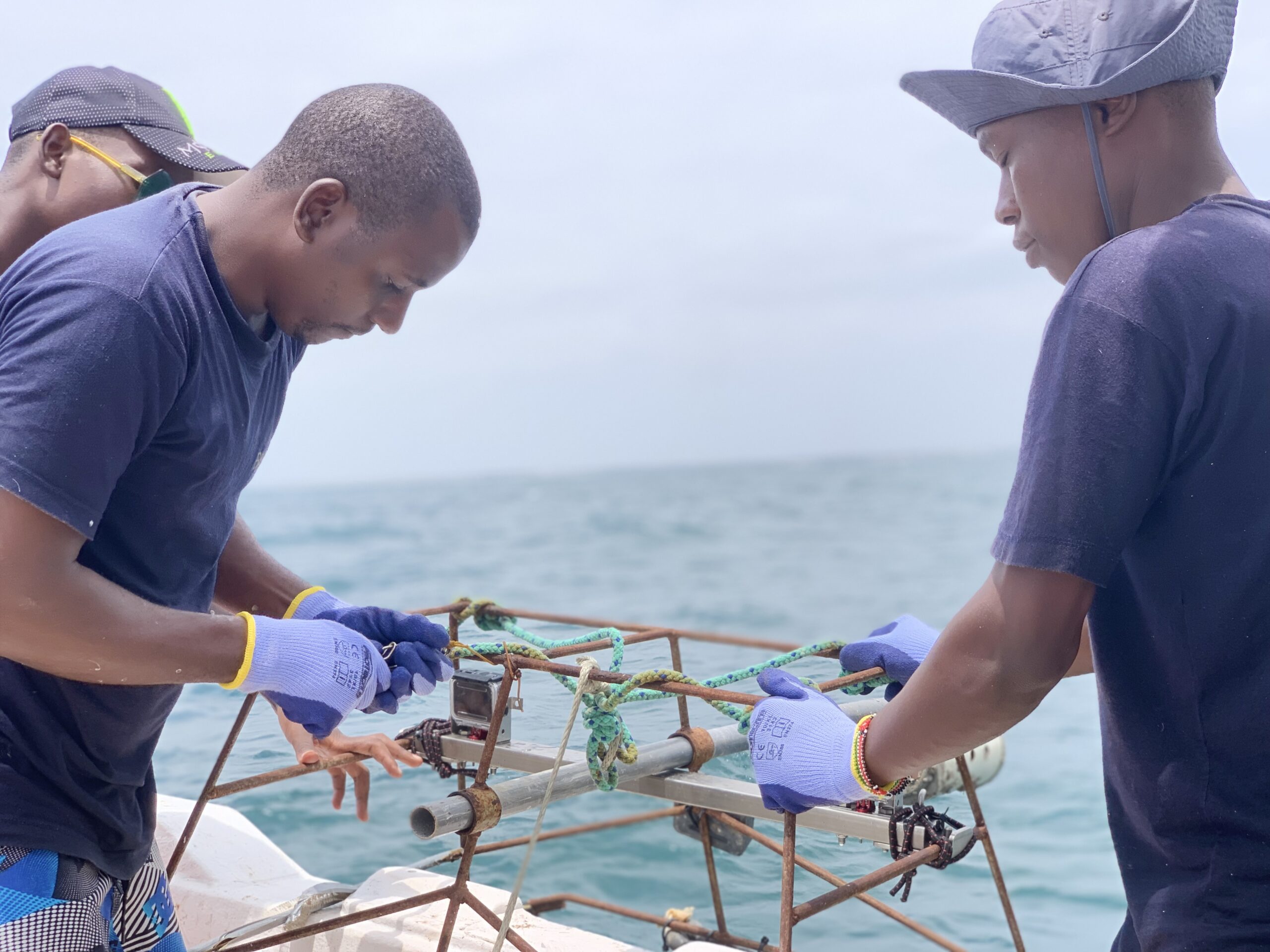
Through our community-led fisheries management programme and research projects such as our Kenya BRUV Project, we support communities to monitor their fisheries and develop management plans to prevent catch of endangered or juvenile elasmobranch.

We also work closely with passionate community members to support their deeper involvement in science and research to ensure they’re not just data collectors – they’re scientists too!

4. Policy from the People

Community-led advocacy ensures national and regional policies make sense on the ground and will help us achieve conservation goals.  Our model scales: what’s working within the fisher communities today informs national strategy tomorrow.

Where are they and when are they around?

At the start of 2022 we began our first deployments of the Kenya BRUV project.

It is part of a broader project led by Wildlife Conservation Society (WCS), spanning multiple countries in the West Indian Ocean: Kenya, Tanzania, Madagascar, Mozambique.

We are very proud of the research model we developed here where members of the local fisher community were deeply involved in the research process, beyond just the data collection and field work.

This helped prove that grass-root conservation organizations and the fisher community can – and should be – more involved in scientific research process.

This particular project and sampling series followed from a 2018 Baited Remote Underwater Video (BRUV) project conducted by WCS that looked to identify sites with high densities of shark or rays and therefor areas which are important for conservation.

The research was looking into seasonality of sharks and rays.

If we consider samples from different times of the year, we can answer some helpful questions which will help inform fisheries management and conservation efforts.

The project is done In collaboration with Wildlife Conservation SocietyKenya Wildlife ServiceA Rocha Kenya and Extra Divers Temple Point.

Education & Awareness - the foundation to conservation

In collaboration with our partner Coral Reef Care we supported and developed Shark & Ray educational programs with various partners and stakeholders along the Kenyan coast. We have two distinct kits, one for children and one for adults.

If you’re interested let us know, you’re welcome to use them too!

Since 2023, these kits have been used by ourselves and partners and we continue to refine and adapt them to achieve the greatest impact.

We are empowering organizations and coastal communities with knowledge and educational material on these incredible creatures. As we have seen with other species protection, people care for and protect that which they understand. And this understanding comes from education. We are bridging this knowledge gap and on a journey to see sharks and rays thriving in our oceans once again!

Pic: Adult black tip reef shark in shallows of Watamu MPA.
Our Partners

Learn more about our Shark & Ray work below

Kenya BRUV project

Earlier this year we began our first deployments of the Kenya BRUV project. It is part of a broader project led by …